
In this article
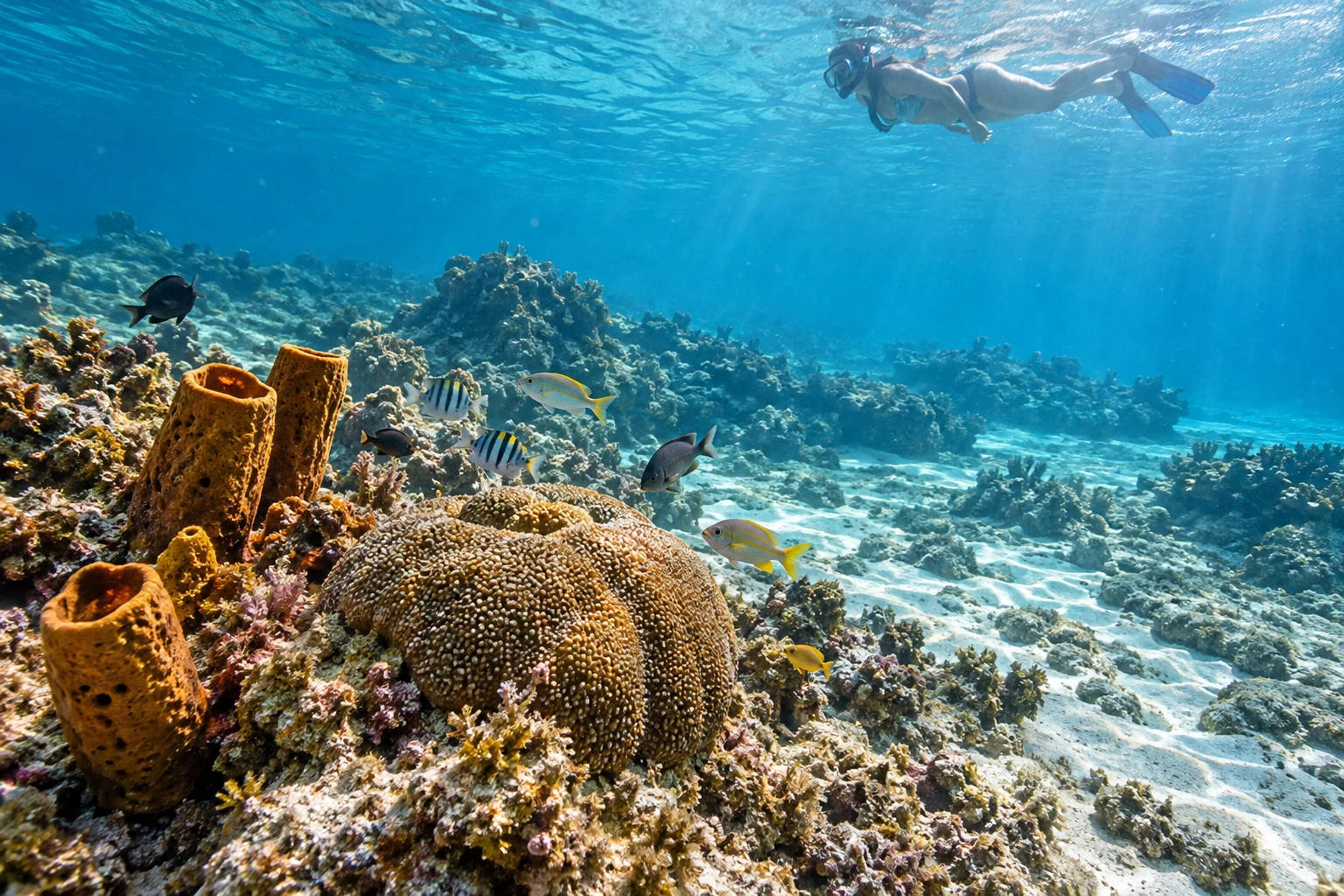
There is more to a reef than a flash of colour. On a Catalina snorkeling trip, noticing a fish’s outline, the texture of a colony or the way something moves can make the experience more rewarding. You do not need to name every species. Start with a few observable features, then ask your guide about what you actually saw.
Plan my Catalina snorkeling tripRecognizing fish: shape, pattern and behaviour
Begin with the silhouette: is the body tall and flattened, slender, or more rounded? Then notice the tail outline, stripes, spots and the position of any distinctive marking. Several different fishes can share one feature, so record a combination rather than guessing a species from a single yellow patch.
Watch what the fish is doing without following it. Is it moving alone or with others, hovering above the reef, or passing between rock and sand? A short description such as “small, striped, moving in a loose group” is more useful for a later conversation than an uncertain name. Behaviour helps describe a sighting; it does not prove an identification.
Keep your place in the guided group. Do not chase a fish into a crevice, feed it for a photograph or move closer at the expense of your route and surroundings. If taking a picture is appropriate, include enough of the body to show its outline. Review the image afterwards rather than losing track of the guide while checking the screen.
Catalina Island Marine Life & Reef EtiquetteTelling corals and sponges apart
A coral is an animal, not a decorative stone. Many reef-building corals form colonies of small animals called polyps and produce a hard skeleton. From a respectful viewing distance you might notice repeated surface patterns or rounded, branching or plate-like growth. These shapes are starting points for observation, not names of species found on your departure.
Sponges are a different animal group: they move water through their bodies and filter food from it. Some have tube or vase-like forms and visible larger openings; others spread across surfaces or form masses. A tube shape or a hole alone is not proof that something is a sponge. You cannot reliably identify every organism from a moving surface view.
Do not test softness, poke an opening or lift anything for a better look. “Coral-like growth” or “tube-shaped organism” is an honest description when you are unsure. If your confirmed route includes Aquarium, its name refers to an open-water reef site, not a constructed aquarium or a promise of particular inhabitants.
The Aquarium at Catalina: What to Ask Before Your Reef TripWhat you can see from the surface
Snorkeling gives a view from the surface. Distance, light, surface movement and suspended material affect how much detail you can distinguish. A bright beach photograph is not a report of visibility at the reef. Avoid making a species claim from a small, distant outline that you cannot see clearly.
The Wall is a site name, not a requirement to descend. Snorkelers observe from above; a diver’s closer view or a different depth cannot be treated as the same experience. Do not dive down to copy a photograph or leave the agreed snorkeling area to inspect an object. Ask the team what is appropriate for your activity and conditions.
Colours in a picture depend on light and the camera as well as the subject. Use texture and overall form alongside colour, and do not diagnose coral health from a white patch in a distant image. Notice what you can see comfortably on that day; a useful observation does not need a dramatic animal or perfect water.
Catalina Island Clear Water: Visibility, Weather & ExpectationsPreparing for your reef visit
Before entering, listen to the briefing, check mask fit and confirm flotation and supervision with the team. Say how confident you are in the water. Pick a simple observation goal: notice a fish outline, a fixed growth form and one behaviour. These are optional prompts, not a task list that overrides comfort or instructions.
Keep fins, hands, straps and cameras clear of the reef. Ask where to pause if you need an adjustment instead of standing on coral. Make your notes after you are back aboard: where you saw the organism, its shape and what it was doing. A locally knowledgeable guide may help narrow it down; “not sure” remains a valid result.
When choosing a trip, confirm the actual reef plan rather than assuming The Wall or Aquarium is always included. CatalinaTrip’s published snorkeling tour is US$99 per person, full day with transfer, drinks and a Dominican beach buffet. Check equipment, participation requirements, pickup and the complete party total before booking; wildlife is never a guaranteed inclusion.
The Wall at Catalina Island: Snorkeling & Diving GuideTurn your plan into an enquiry
Choose snorkeling for a surface view of the reef and check the arrangements that fit your swimming confidence. Read the activity guide, then request your Catalina date with realistic expectations about the route and what you may observe.
Catalina Island Snorkeling: Reefs, Conditions & the US$99 Tour